
New eye imaging approach may help distinguish ALS from Alzheimer’s
Study finds polarized light reveals differences in retinal protein deposits
Written by |

- A noninvasive eye imaging approach may differentiate TDP-43 clumps (ALS) from other protein deposits.
- Polarized light analysis of retinal protein clumps helps distinguish ALS from Alzheimer's disease.
- This approach may offer a fast, noninvasive, and inexpensive way to help distinguish these diseases.
An analysis of how polarized light interacts with clumps of proteins in the eyes may help differentiate amyotrophic lateral sclerosis (ALS) from Alzheimer’s disease and related conditions, a new study shows.
In experiments using post-mortem retinal samples — a light-sensitive layer at the back of the eye — researchers found that light patterns differed between samples containing TDP-43 clumps, which are linked to ALS and frontotemporal lobular dementia (FTLD), and those containing amyloid-beta deposits associated with Alzheimer’s disease.
“We hope that within a few years, this technology will evolve into a simple eye test capable of detecting and distinguishing multiple brain diseases, giving patients in smaller, underserved communities access to this type of testing,” Melanie Campbell, PhD, co-author of the study at the University of Waterloo, said in a university news story. “A fast, accessible diagnostic tool could make a profound difference for patients and families.”

Study explores polarized light to identify protein differences
The study, “Retinal Deposits of TDP-43 and Amyloid Beta and Associated Neurodegenerative Diseases are Accurately Classified using Measured Interactions with Polarized Light in Machine Learning Algorithms,” was published in Alzheimer’s & Dementia.
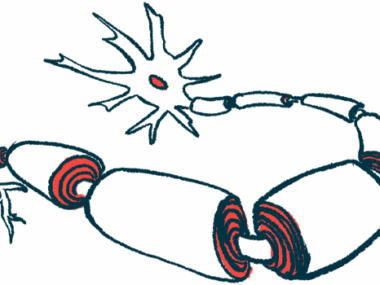
ALS is caused by the degeneration and death of motor neurons, the nerve cells that control movement. The disease is almost always marked by abnormal clumps of the protein TDP-43 in nerve cells, which are also characteristic of FTLD, a disease marked by cognitive issues that can co-occur with ALS.
While ALS and FTLD are associated with TDP-43 clumps, many neurological disorders are marked by abnormal clumps of other proteins in nerve cells. In Alzheimer’s disease, for example, patients often have aggregates of a protein called amyloid-beta.
Campbell and colleagues are working to develop an eye imaging approach that could distinguish between different protein clumps using polarized light, which could offer a potential noninvasive way to help distinguish these neurological disorders.
“This is a major step toward earlier and more accurate diagnosis,” Campbell said. “Right now, FTLD and ALS are diagnosed only after symptoms appear, which often means the disease is already advanced. Being able to detect these conditions earlier could transform how we treat them.”
How polarized light and AI help distinguish protein deposits
The researchers’ approach works by shining polarized light on protein deposits in the retina. Different proteins interact with this light in distinct ways, producing unique optical patterns. Machine learning algorithms then analyze these patterns to identify the type of protein deposits present.
In this study, the scientists tested the method on post-mortem retinal samples from people who had died with Alzheimer’s disease, ALS, or FTLD. Their analysis showed the technique could distinguish deposits of amyloid-beta associated with Alzheimer’s disease from deposits containing TDP-43, with accuracy of more than 96% in machine learning analyses.
“This first differential diagnostic of Alzheimer’s disease from TDP-43 related diseases, is early, non-invasive and inexpensive and would reach underserved populations,” the researchers concluded, while noting that further studies are needed to explore this approach as a potential diagnostic tool.



Leave a comment
Fill in the required fields to post. Your email address will not be published.