
Spontaneous mutations may underlie some sporadic ALS cases
Genetic sequencing shows non-inherited mutations could cause disease
Written by |
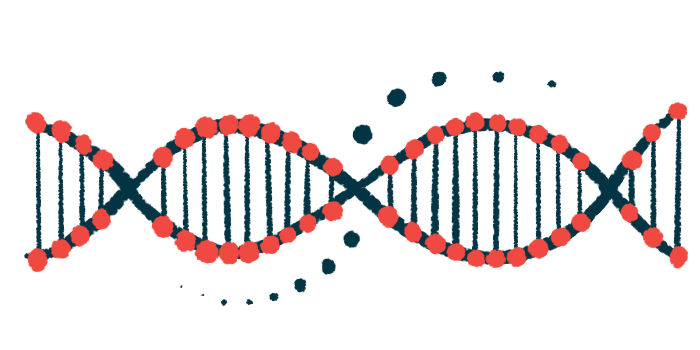
It’s well established that some cases of amyotrophic lateral sclerosis (ALS) are caused by mutations that are inherited from a person’s parents — but a new study shows some cases of sporadic ALS may be caused by mutations that are not inherited, and instead occur spontaneously in developing nerve cells.
“Our study opens new avenues for understanding the etiology [underlying cause] of [sporadic] ALS,” researchers wrote in the study, “Somatic mosaicism in ALS and FTD identifies focal mutations associated with widespread degeneration,” which was published in Nature Genetics.
ALS is a neurodegenerative disorder marked by the loss of nerve cells that control movement, resulting in symptoms such as muscle weakness and eventual paralysis. The underlying causes of ALS are not fully understood.
In familial ALS, the disease is caused by germline mutations — that is, mutations that affect a sperm or egg cell before conception, so that a person conceived from those cells carries the mutation in every cell of their body. There have also been a few cases of sporadic ALS associated with inherited mutations.

Somatic mutations
Research in ALS genetics has focused almost exclusively on germline mutations, but these aren’t the only type of mutation that can occur in early development. A mutation may arise in a single cell in a developing embryo, and as this cell gives rise to multiple others, all its daughter cells will have the acquired mutation.
These so-called somatic mutations can lead to a person carrying a particular mutation only in the brain or spinal cord that cannot be detected in blood cells, which are used in most genetic analyses.
An international team of scientists sought to determine whether somatic mutations may play a role in some cases of sporadic ALS that aren’t associated with germline mutations.
Using tissue collected after patients had died, the researchers conducted genetic sequencing of brain and spinal cord cells, as well as cells elsewhere in the body, to see if any had somatic mutations specifically affecting the nervous system.
The analysis involved samples from nearly 400 people with sporadic ALS or frontotemporal dementia (FTD), a related neurodegenerative disease, and nearly 150 controls matched for age.
The researchers found some patients with known ALS-causing mutations in their nervous system, but not elsewhere in their body. Some of these patients had no germline mutations, consistent with the notion that sporadic mutations may underlie some cases of the disease.
Sporadic mutations predicted to have a deleterious effect on the function of known ALS and FTD genes were found in about 2.1% of patients without germline mutations, which the researchers said is “a small but significant fraction.” They noted that, due to technical limitations, this rate “is likely greatly underestimated.”
They said their data provide “proof of concept for a contribution of somatic variants to disease [biological mechanisms].”
In the patients who carried somatic mutations, the regions of nerve cells carrying these mutations tended to show the most damage. Still, other parts of the nervous system could also accrue damage, even if the cells didn’t have these mutations, the researchers noted.
These patterns suggest that an ALS-causing somatic mutation in a small number of cells might trigger ripple effects that lead to more widespread problems, ultimately driving disease. The researchers called for further genetic studies into how these relatively understudied mutations may affect ALS.

Leave a comment
Fill in the required fields to post. Your email address will not be published.