A Look Behind the Care: Inside One Care Partner’s ALS Story
Written by |
This content is sponsored by Tanabe Pharma America, Inc. (TPA) and is intended for US audiences only. Any other present or future content posted by the contributor, not expressly designated as “Tanabe Pharma America, Inc. – sponsored content” is not associated with TPA.
The information provided here is general in nature and is not intended to be a substitute for professional medical advice, diagnosis, or treatment. You are strongly encouraged to seek the advice of your doctor or other qualified healthcare provider with any questions regarding a medical condition.
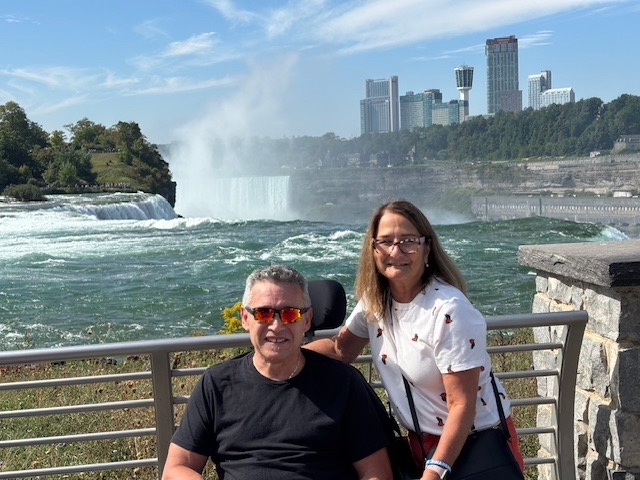
National Caregivers Day is honored this year on February 20, 2026, offering a moment to pause and acknowledge the role of caregivers, one that is often deeply personal, demanding, and largely unseen. Today, 1 in 5 Americans serve as a caregiver to someone living with a serious illness, often stepping into the role without preparation or recognition.1 For many, caregiving becomes a full-time responsibility that reshapes routines, relationships, and identity.2 For Theresa, caregiving became a defining part of her life after her husband, Robert, was diagnosed with amyotrophic lateral sclerosis (ALS).
Robert’s Diagnosis
Robert’s symptoms appeared nearly two years before Robert and his family received a diagnosis for what was happening. Like many, he began having trouble with his hands and balance, and his speech gradually changed.3
“Our daughter actually suspected it before we did,” said Theresa, explaining how ALS slowly became the likely diagnosis over time with a list of potential diagnoses dwindling down with each test and appointment. Then came the moment that confirmed what Theresa says she already sensed. Robert was officially diagnosed with ALS, a day she’ll never forget.
For many families, receiving a diagnosis marks the end of one journey and the beginning of another – a new normal that can be intense and demanding. Most people with ALS succumb to the disease within three to five years after the onset of symptoms, which often requires round-the-clock care and commitment from others.4
An Answer Changes Everything
Before caregiving became her full-time role, Theresa spent more than four decades working in software delivery. She continued working remotely during the pandemic while caring for Robert at home, but eventually the demands became too great. The decision to retire was not just logistical, it carried emotional weight.
“I miss the day-to-day work interactions – the people and the conversations,” Theresa said.
In her new routine, mornings revolve around helping with medications, and ensuring Robert is safely positioned in his chair before she turns to household responsibilities. Like many ALS caregivers, Theresa manages dressing, meals, hygiene support, and transportation, along with cooking, cleaning, and home maintenance.
“It’s amazing what you have to think about that you never thought about before,” she said.
Beyond the physical tasks, Theresa says the mental load can be just as heavy. Caregiving requires constant awareness of safety, timing, and emotional cues leaving little room for spontaneity.

Finding Balance
Finding time for herself has been essential to sustaining her caregiving role. Theresa schedules walks, practices meditation, and prioritizes small routines that help allow her to reset physically and mentally.
Theresa has also added an at-home nurse to Robert’s care team, who comes once a week to assist in Robert’s grooming needs and provides Theresa with some reprieve.
“If I don’t plan time for myself, it just doesn’t happen. Friday is usually the day I can get out for a little bit. That’s when I can go to lunch for an hour. If I know he’s taken care of, I can step away for a short time,” she said.
For Theresa, National Caregiver’s Day is not about recognition for its own sake, but about honoring the commitment and care that caregiving requires every day.
“You can’t do it by yourself. It took me a little bit before I started to join caregiver meetings, I was a little stubborn. Now I’m very comfortable with it. It’s good to hear, ‘Have you experienced this?’ and know you’re not the only one,” Theresa shared.
Outside of support groups, Theresa found additional answers to lingering questions on the Caregiver Support page offered on the ALS Pathways website. The page offers information on the basics of caring for someone with ALS (like what safety equipment is needed and adaptive clothing recommendations), as well as advice for dealing with burnout, managing its effects, and building a strong support system.
CNP-TPA-US-0016 02/26
1 AARP. Caregiving in the United States. AARP Public Policy Institute. https://www.aarp.org/pri/topics/ltss/family-caregiving/caregiving-in-the-united-states/
2 ALS Association. Support for caregivers. https://www.als.org/navigating-als/support-for-caregivers
3 Muscular Dystrophy Association. “Stages of ALS.” MDA.org. https://www.mda.org/disease/amyotrophic-lateral-sclerosis/signs-and-symptoms/stages-of-als
4 Amyotrophic Lateral Sclerosis (ALS) | National Institute of Neurological Disorders and Stroke