
Families Are Waiting. I Know Because Mine Did.
The gaps in ALS care are still there, but you can help close them
Written by |
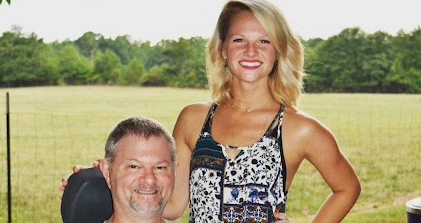
Lindsey with her father, Mickey, whose battle with ALS reinforced the importance of faster access to care and support. (Photo courtesy of Lindsey Beard)
When my father, Mickey, was diagnosed with amyotrophic lateral sclerosis (ALS), I was a sophomore in high school. Our world changed overnight. Like so many families, we were suddenly navigating a disease we barely understood — one that moves quickly and gives you very little time to adjust. We were searching for answers, for care, for support. And more often than we should have been, we were waiting.
Waiting for appointments.
Waiting for equipment.
Waiting for guidance on what came next.
But ALS doesn’t wait.
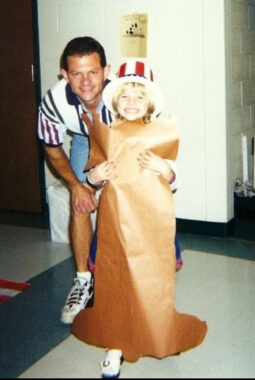
Before ALS changed their lives, Lindsey and her dad, Mickey, shared a close bond rooted in family, sports, and resilience. (Photos courtesy of Lindsey Beard)
My dad lived with ALS for 17 years. His progression was slower than many, but the disease was no less relentless. A high-performing, larger-than-life person, a third-degree black belt, a girls’ lacrosse coach at McIntosh in Georgia, and someone who could rebuild his beloved 1966 Mustang from the ground up, ALS gradually took away his independence, piece by piece.
Still, it never took away who he was.
He was smart, sassy, and endlessly curious about the world — getting his daily news from episodes of The Tonight Show Starring Jimmy Fallon he recorded and watched religiously. He was a charmer, the kind of person every nurse wanted to care for during the nearly two years he spent in hospice at Brightmoor. His team rallied around him, telling him he would always be with them. And he believed it.
He passed away on Dec. 16, 2023. But like so many families, our journey with ALS lasted far longer than we ever expected — and required far more support than we knew how to find at the beginning.
My father’s diagnosis was not genetic. It was sporadic, like the vast majority of ALS cases, and a reminder of how much we still don’t understand about this disease. Today, research efforts are working to uncover those answers and move us closer to effective treatments. This includes the Champion Insights study, supported by the Muscular Dystrophy Association (MDA), focused on high-performing individuals diagnosed with ALS.
Care made a difference for my dad. He was treated at the MDA/ALS Care Center at Emory University in Atlanta, where specialists like Dr. Jonathan Glass understood the complexity of the disease and helped us navigate each stage. That kind of coordinated, multidisciplinary care is critical, but not every family may know they can receive immediate guidance from MDA to access care easily and quickly.
Today, I work at the MDA, where I hear stories like mine every day. Families are still navigating the same uncertainty, the same urgency — and too often, the same gaps in care and support.
No one should have to face ALS alone — or wait for the help they need. That urgency must be reflected not just in care, but in policy. Congress has an opportunity right now to make a tangible difference for families living with ALS.
Reauthorizing the ACT for ALS before the Sept. 30, 2026, deadline would help expand access to the next generation of treatments, support participation in clinical trials, and accelerate cutting-edge drug discovery.
At the same time, lawmakers should move swiftly to pass the ALS Better Care Act, which is bipartisan legislation that would expand Medicare coverage for essential ALS-related services and significantly improve quality of life for those living with the disease. These are practical, bipartisan steps that would ease the burden on families who are already carrying so much.
Community action plays a role, too.
For nearly two decades, Dutch Bros has supported ALS families through its annual Drink One for Dane Day, held this year on May 15. The day honors co-founder Dane Boersma, who lived with ALS and received care through the MDA’s ALS Care Center network. What began as a tribute has become a lasting legacy — one that reflects the power of community to show up for families facing this disease and to help ensure others have access to the care and support they need.
For me, this work is personal.
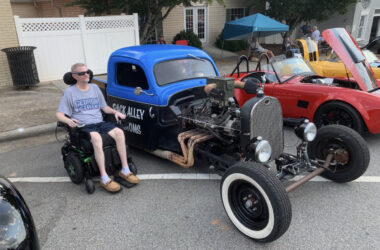
Lindsey recalls Mickey being curious, funny, and deeply loved throughout his ALS journey.
In addition to my role at MDA, I’ve found ways to carry my father’s legacy forward, supporting efforts like the MDA Night of Hope Gala that recently raised nearly $1 million for ALS research and care and running marathons with MDA Team Momentum. Because I know what it feels like to try to stay one step ahead of a disease that never slows down — and how much it matters to have support along the way.
This ALS Awareness Month, we have an opportunity — and a responsibility — to do better.
We can ensure families have faster access to care and support. We can push for policies that reflect the urgency of this disease. And we can continue to invest in research that brings new treatments closer.
Because families are still waiting.
And they shouldn’t have to.

Leave a comment
Fill in the required fields to post. Your email address will not be published.