
ALS didn’t end my story — it helped me discover my purpose
Accessibility, connecting with others restored my dignity and independence
Written by |
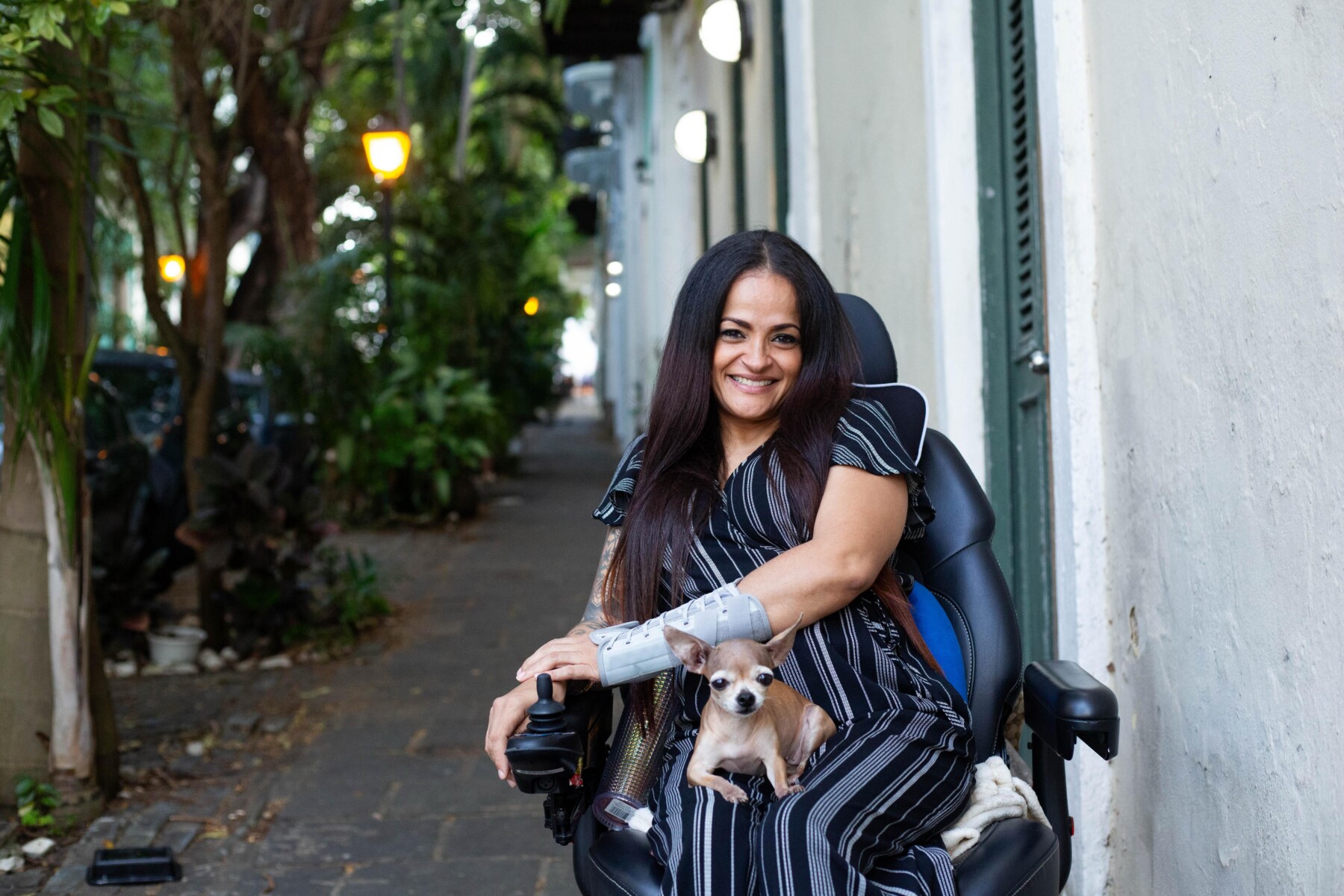
A portable ramp, provided by a Muscular Dystrophy Association equipment grant, gave Monica Torres Rivera new freedom. (Courtesy of Monica Torres Rivera)
When I was diagnosed with ALS, my first thought wasn’t about me. It was about my children. I’m a mother of six; one of my children has passed away, and today my family and I are building a new life in New York after moving from Puerto Rico. I wondered how I would continue showing up for the people who need me most. Those questions became my motivation.
People often think ALS takes everything. It changes your body, your plans, and the way you move through the world. But it doesn’t have to take your purpose. I refuse to let ALS define who I am. It hasn’t taken away my love for my family or my belief in justice, dignity, and equality. Today, I’m pursuing a master’s degree in criminology and criminal justice, with plans to continue toward a doctorate. My passion for social justice became deeply personal. Now I don’t just study accessibility and equal rights, I live them.
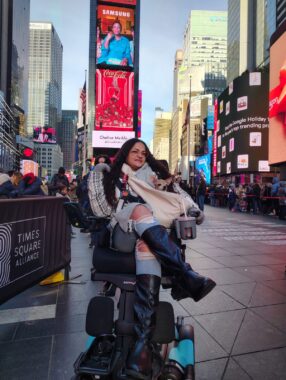
Rivera takes in Times Square after relocating to Manhattan. (Photo by Luis Rivera)
Accessibility isn’t a luxury. It’s what allows people like me to participate in everyday life. Sometimes the hardest part of living with ALS isn’t the disease itself. It’s arriving somewhere without a ramp, missing your child’s school performance because a building isn’t accessible, or discovering that equipment you need isn’t covered by insurance. Those barriers can make people feel invisible.
Early in my diagnosis, I needed a portable ramp to enter buildings and continue living the life I wanted. Without it, I was missing appointments, struggling to attend school, and becoming isolated. Through the Muscular Dystrophy Association’s (MDA) Durable Medical Equipment Grant Program, I received a portable ramp that changed my life. It gave me more than access. It gave me independence. Now I can attend classes, participate in my children’s lives, advocate in my community, and continue my education. For me, accessibility is about dignity and equal opportunity.
I’ve also learned that support is about more than equipment. Not long after my diagnosis, my family attended an MDA Family Getaways program in Puerto Rico. For one weekend, we weren’t focused on doctor’s appointments or the next challenge ALS might bring. Everything was accessible and thoughtfully planned so we could simply enjoy being together. I wheeled across the beach and went kayaking for the first time. We laughed, met other families who understood our journey, and made memories my children will carry forever. The MDA Family Getaway reminded me that when accessibility removes barriers, families can focus on what matters most — being together.
Another unexpected gift was the community I’ve found through MDA. Through MDA Peer Connections and monthly MDA Community Support Group meetings, I’ve found a place where I can be honest about what I’m experiencing and know I’m not alone. Living with ALS can be overwhelming and isolating. Sometimes you don’t need someone to fix anything. You just need someone to listen, understand, and remind you that you’re not facing this journey by yourself. Through MDA Peer Connections, I’ve met other people living with ALS who understand this journey. We share advice, encouragement, and hope. The monthly MDA Community Support Group meetings give me space to talk, listen, ask questions, and hear from people who understand the realities of living with this disease. They help me feel less alone and more heard.
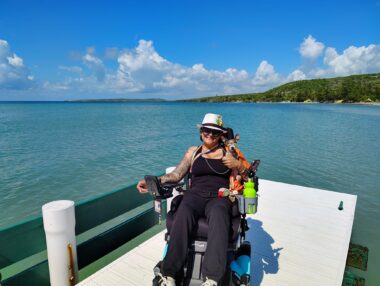
Rivera enjoys the beach at Copa Marina Hotel & Beach Resort in Guanica, Puerto Rico, a destination in the MDA Family Getaways program. (Courtesy of Monica Torres Rivera)
MDA has reminded me that asking for support isn’t a sign of weakness. It is part of moving forward. That sense of connection has strengthened my family, too. My children watched MDA volunteers care for families with such kindness during our family getaway that they now want to volunteer themselves one day. They saw what compassion looks like in action.
I continue to speak about accessibility, dignity, and inclusion because I know others face the same barriers. Disability doesn’t erase our goals, intelligence, or value.
We are still parents.
We are still students.
We are still professionals.
We are still dreamers.
We are still here.
To anyone recently diagnosed with ALS, don’t let anyone else write the ending to your story. There is still life to live, memories to create, and dreams worth chasing. You don’t have to do it alone. Organizations like MDA are ready to support you, communities are waiting to welcome you, and people understand what you’re going through.
Sometimes support looks like a ramp, a family getaway, or a monthly support meeting where you can speak openly and be heard.
Most importantly, there is hope.
ALS may change how I move through the world, but it has never changed why I move through it. My purpose is to show my children what courage looks like, advocate for people whose voices deserve to be heard, and leave behind a legacy of resilience rather than fear. We are more than a diagnosis. We are people with dreams, courage, and voices who deserve to be heard.
This article was provided by our partner, Muscular Dystrophy Association. It has been reviewed by Bionews for accuracy and relevance. The views and opinions expressed are those of the author and do not necessarily reflect the views of Bionews or ALS News Today.


Yana Cruz-Pagan
Thank you for the encouragement. As a Nuyorican recently diagnosed your words are a blessing