
Early ALS trial finds therapy well tolerated and lowers disease markers
Small study found no serious side effects, but clinical benefit remains unproven
Written by |
- RAG-17 is an experimental RNA-targeting therapy designed to lower toxic SOD1 protein in people with SOD1-ALS.
- A six-person trial found RAG-17 was well tolerated, with no serious side effects.
- RAG-17 lowered two disease markers, supporting further clinical study.
RAG-17, an experimental RNA-targeting therapy designed to treat amyotrophic lateral sclerosis (ALS) caused by mutations in the SOD1 gene, was generally well tolerated and substantially lowered two disease-related biomarkers in a first-in-human Phase 1 trial involving six people.
The investigational therapy also showed promise in animal studies, delaying disease onset in one model, extending survival when treatment began after symptoms appeared in another, and producing sustained biomarker reductions that may support longer intervals between doses.
The study, “Oligonucleotide–siRNA conjugate for SOD1 amyotrophic lateral sclerosis: a phase 1 trial,” was published in Nature Medicine. The work was funded in part by Ractigen Therapeutics, the company developing RAG-17.

RAG-17 aims to lower toxic SOD1 protein
“The publication of our extensive RAG-17 dataset in a journal as prestigious as Nature Medicine is a profound validation of our scientific approach,” Long-Cheng Li, MD, founder and CEO of Ractigen and co-author of the study, said in a company press release.
ALS is a disorder in which motor neurons, the nerve cells that control movement, become progressively damaged and die. In most people, the cause of ALS is not known, but a minority of cases are caused by genetic mutations. Mutations in the SOD1 gene cause roughly 1 out of every 50 ALS cases; these cases are commonly referred to as SOD1-ALS.
“SOD1-ALS is a devastating and rapidly progressive disease. While recent therapeutic advances have provided hope, there remains a critical need for therapies with improved potency, durability, and patient convenience,” said Yilong Wang, MD, PhD, co-author of the study at Beijing Tiantan Hospital.
ALS-causing mutations in the SOD1 gene lead to the production of abnormal, misfolded SOD1 protein that can form toxic clumps and is thought to damage motor neurons. To make a protein, a cell first copies a gene’s instructions into a temporary molecule called messenger RNA (mRNA). The cell then uses that mRNA as a template to produce the protein.
RAG-17 is an RNA-targeting therapy designed to reduce production of SOD1 protein by breaking down SOD1 mRNA.
The investigational medicine has two main components. One is a small interfering RNA (siRNA), a short sequence of genetic material designed to bind to and break down SOD1 mRNA. The other is an accessory oligonucleotide, another short piece of genetic material designed to help the siRNA enter cells and spread through the central nervous system.
Animal studies show survival and biomarker gains
In this study, researchers first tested RAG-17 in animal models. In rats treated before symptoms developed, RAG-17 delayed the onset and progression of motor symptoms and extended survival. In mice, early treatment extended survival by up to 95%, while treatment started well after symptoms appeared extended survival by up to 75.8% and improved motor function. In monkeys, RAG-17 reduced SOD1 mRNA levels in lumbar spinal cord tissue by up to 91%, with the effect persisting for up to 72 days. These sustained reductions led the researchers to suggest that longer intervals between doses may be possible.
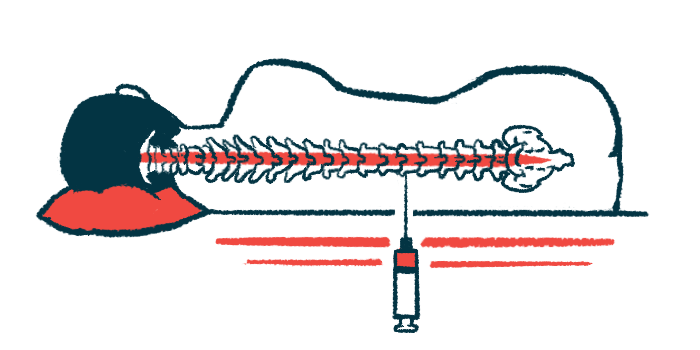
The researchers then conducted a first-in-human, open-label clinical trial (NCT05903690) in China involving six people with SOD1-ALS. All participants received RAG-17 through an injection into the spinal canal, known as an intrathecal injection.
The first group of three participants received an initial dose of 60 mg, while the second group of three started at 90 mg. Doses were then increased in 30 mg steps. Five participants ultimately received maintenance doses of 150 mg, while one received 180 mg.
The main goal of this investigator-initiated study was to evaluate the safety and tolerability of RAG-17 in people with SOD1-ALS. RAG-17 was generally well tolerated, and no serious adverse events were reported through the data cutoff.
Two participants experienced mild muscle tremors after their first doses, but these resolved without medical intervention. Two headaches also occurred and resolved after intravenous hydration; investigators assessed them as related to the injection procedure, not RAG-17. One participant with pre-existing fatty liver and abnormal liver function had an increase in a liver enzyme level that was considered potentially related to both RAG-17 and the underlying condition. No other adverse events were considered related to RAG-17.
“The compelling biomarker responses and safety profile we have observed in these patients, combined with the unprecedented survival benefit seen in advanced-stage animal models, suggest that RAG-17 has the potential to be a best-in-class disease-modifying therapy,” Wang said.
Blood levels of neurofilament light chain, a well-established marker of nerve damage, also decreased, with mean reductions of 62% in the first group and 52% in the second group by the end of the study.
Finally, exploratory measurements showed that lung function was maintained or improved in some participants. The average rate of decline on the Revised ALS Functional Rating Scale, a measure of day-to-day functioning, was slower after treatment than the retrospectively estimated pretreatment rate, although individual results varied.
“The ability to safely deliver an siRNA directly to the [brain and spinal cord], achieve deep and durable target engagement, and dramatically alter the disease course in rigorous preclinical models—and now, to see these results successfully translate into humans—marks a major milestone for oligonucleotide therapeutics,” Li said.
“We are incredibly encouraged by the substantial reductions in both disease-driving SOD1 protein and neurofilament light chain (NfL) in our patients, and we look forward to advancing RAG-17 to bring a highly potent, less frequently dosed treatment option to the SOD1-ALS community,” Li added.


Leave a comment
Fill in the required fields to post. Your email address will not be published.