
PBS documentary on runner with ALS explores identity, caregiving
'Loving John' highlights gay Pacific Islander's experience
Written by |
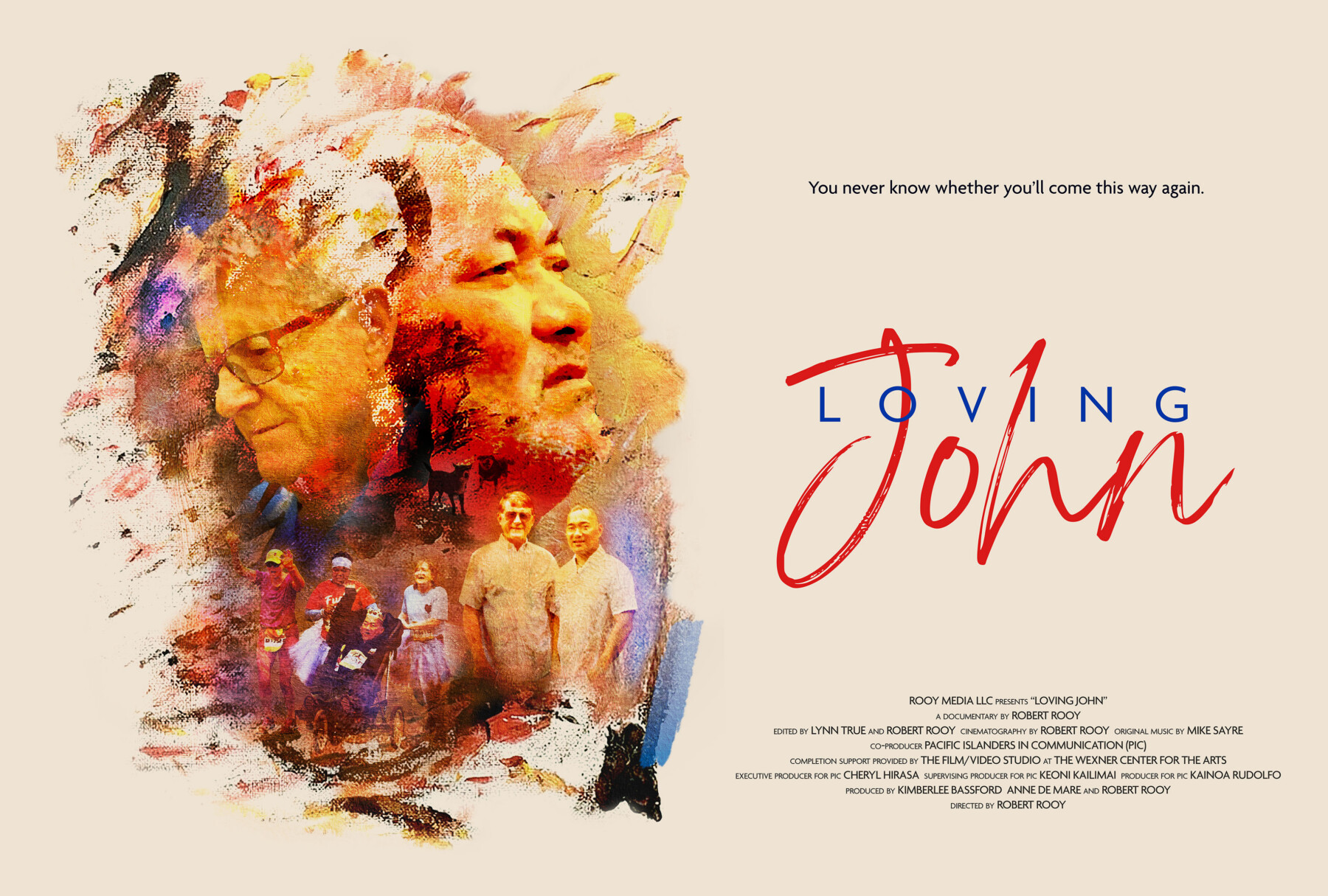
The documentary 'Loving John' is airing on PBS stations. (Image courtesy of Rooy Media)
- A PBS documentary, "Loving John," explores a gay American Samoan man's final years with ALS.
- It highlights the disease's progression, caregiving challenges, and identity's role.
- The film emphasizes resilience, love, and community support in facing ALS.
A feature documentary airing on PBS delves into a man’s final years living with amyotrophic lateral sclerosis (ALS), offering an intimate portrait of resilience, caregiving, and enduring love while exploring how culture and identity shaped his experience with the disease.
The film “Loving John” follows John Godinet, who was born in American Samoa and later settled in rural Maryland with his husband of nearly 40 years, Peter. Godinet was an ultra-runner, competing in marathons and 100-mile races, and a community leader. He died in May 2021 after a six-year fight against ALS.
The documentary is designed as both an intimate view of Godinet’s final years and a tribute to his life. It was directed and produced by Robert (Rob) Rooy, whose previous documentary, “Deej,” won a Peabody Award, and is a co-production of Rooy Media and Pacific Islanders in Communications.
According to the film’s website, it “dives into the complexities, imperfections and power of love, lived with a ticking clock” and ” invites viewers to deeply inhale the fullness of our shared human experience, made all the more precious because of its transience.” A trailer for the documentary is available online.

Struggles and triumphs
Godinet grew up in American Samoa and served in the U.S. Army as a young adult. After moving to Myersville, Maryland, he became deeply involved in his community, volunteering with local organizations, teaching aerobics and other fitness classes, and mentoring new runners of all ages.
The film highlights Godinet’s struggles and triumphs in dealing with ALS. Although the disease gradually took away his ability to run independently, he continued participating in races with the help of a specialized wheelchair and friends who pushed him across the finish line.

John Godinet is propelled by friends through Antietam Battlefield. (Photo credit: Paul Encarnacion)
The documentary also captures his transition from being the primary caregiver in his family to relying on others for daily support, as well as the emotional and practical challenges his partner faced as a caregiver, particularly during the COVID-19 pandemic when outside help was limited.
Beyond the progression of ALS, “Loving John” explores how Godinet’s experiences were shaped by his identities as a Pacific Islander and a gay man. The film examines the trauma he experienced because of his sexuality while growing up, the barriers LGBTQ+ older adults can face when seeking medical and social support services free from discrimination, and the ways Godinet found acceptance and became a respected figure in his predominantly white, rural community.
“What was especially striking to me was the degree to which this ‘outsider’ to a predominantly white, semi-rural community commanded everyone’s affection, devotion and respect,” Rooy said.
The documentary also reflects on the difficult decisions families face as ALS progresses into its final stages and the importance of accepting help from others.
“As I spent more and more time with John, Peter and their closest friends, the story moved into deeper expressions of love, complicated by ALS and then by Covid,” Rooy said. “I could see what an enormous strain John’s unrelenting decline pressed upon everyone. It reawakened in me an appreciation for how we all embrace mortality differently.”

Lucille Pranitis
I also lost my soul mate from ALS. We were told approximately 2 years at best He passed 2024 2 months after diagnosis. We had been told his was very rapid moving. I’m grateful he didn’t suffer longer. I’m angry, disappointed that it was so very fast. I believe we all have purpose. I still find it difficult to read about this disease. My heart goes out to all who suffer the person the care givers, the family and friends. It affects us all. God bless.
Peter Dare
Thank you for sharing John's story. I'm usually in the background, happy to take care of our many dogs, but also happy that John's story can help other families deal with the ALS experience as a challenge with love and respect. Your extended families and friends WANT TO BE helpful if you open your door and heart to let them in.