
Study of veterans shows ALS risk varies by military branch, rank
Researchers note need to identify exposure hazards
Written by |

-
ALS risk for U.S. veterans varies by military branch and rank.
-
Those in the Coast Guard, Navy, and Air Force have higher ALS risk.
-
Further research is needed to identify specific environmental exposures.
For people serving in the U.S. armed forces, the risk of developing amyotrophic lateral sclerosis (ALS) varies by military branch and rank, a study suggested.
The study found the risk of ALS is lower among people in the Marines or Army than among those who served in the Coast Guard, Navy, or Air Force. Data also suggested that military officers have a higher risk of developing ALS than enlisted personnel.
The results may help scientists better understand why people in the military are more likely than the general population to develop ALS, as they indicate that exposure to certain risk factors may be more common in some military branches than in others.
“Our findings suggest that officers and those serving in the Air Force, Navy or Coast Guard may have been exposed to military environments that increase risk of ALS,” Marc G. Weisskopf, PhD, co-author of the study and a professor at Harvard T.H. Chan School of Public Health, said in a press release from the American Academy of Neurology. “Future research should aim to identify these exposures.”
The study, “Association of Military Branch and Rank With Amyotrophic Lateral Sclerosis Incidence Among United States Veterans,” was published in Neurology.

Probing link between military service and ALS
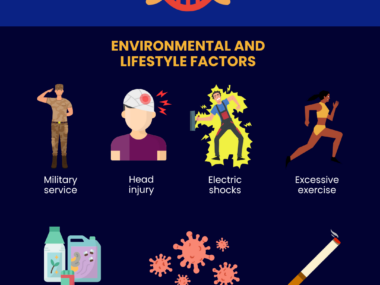
A history of military service is one of the most well-established risk factors for ALS, with service members and veterans being significantly more likely to develop the disease than civilians. The reasons for this are unclear, but it’s long been presumed that people in the military might be exposed to toxins or other risk factors that could explain the increased risk.
Aiming to better understand what these risk factors might be, Weisskopf and colleagues set out to explore whether if ALS risk varies by military branch and rank. The researchers analyzed data from nearly 10 million veterans — mostly men — who had one documented encounter with the Veterans Health Administration from 2000 to 2024.
Results showed that men in the Marines had the lowest risk of ALS among military personnel. Compared with men who served in the Army, Marines had a 22% lower risk of developing ALS.
By contrast, ALS risk was higher among men in the Coast Guard, Navy, or Air Force — by 26%, 15%, and 29%, respectively, compared with men in the army. Statistical analyses also indicated that these differences in disease risk by military branch were most pronounced among younger men.
“Military service is a known risk factor for the development of ALS, but little is known about what factors may contribute to that risk,” Weisskopf said. “Our study looked at the rates of ALS among people in different branches of the U.S. military and found ALS rates varied considerably by branch and rank, with larger differences among younger veterans.”
When the researchers looked at the impact of military rank, they found that officers were significantly more likely than enlisted personnel to develop ALS, with the risk being 64% higher among men and 72% higher among women.
Collectively, the findings suggest that some people in the military may be exposed to environmental or occupational factors that increase their risk of ALS. This may help future studies nail down exactly what those risk factors might be.
“Officers and those serving in the Air Force, Navy, or Coast Guard may incur exposure to military environments that increase risk of ALS,” the scientists wrote. “It is imperative to identify relevant exposures to reduce harm to service members and, potentially, civilians with similar exposures.”
The researchers stressed that although people who have served in the military are more likely to develop ALS than the general population, the overall risk among service members is low. Of the nearly 10 million people in the analysis, about 14,000 (less than 0.2%) developed the disease.
“It is … important to note that ALS is rare and the overall risk remains small, so even statistically significant increases associated with branch and rank represent only modest increases in risk among military personnel,” Weisskopf said.



Edwin Rivas
Sometimes I feel guilty after encouraged my son to join the Air Force and not the Army as I did. Seeing those numbers and my son being an officer, pilot, and given all his best days to his family. I rather have him as a humble laborer but with us. But the Lord has strange ways to show us his mercy, love, and wisdom. My son is a saint and still with me everywhere. I feel it. My son fulfilled what he was commissioned to do and that’s why the Lord wanted him back, where he belongs. Before he left, taught me a lot of lessons, he showed me the face of the Lord.
Don Mikush
My wife is living with ALS. If ALS is so rare, then why do so many people I tell about her either know a family member or a friend who has it or died from it? It happens over and over.