
Blood NfL levels linked to higher ALS risk years before onset
Study tracked nearly 3,000 proteins in more than 52,000 adults
Written by |
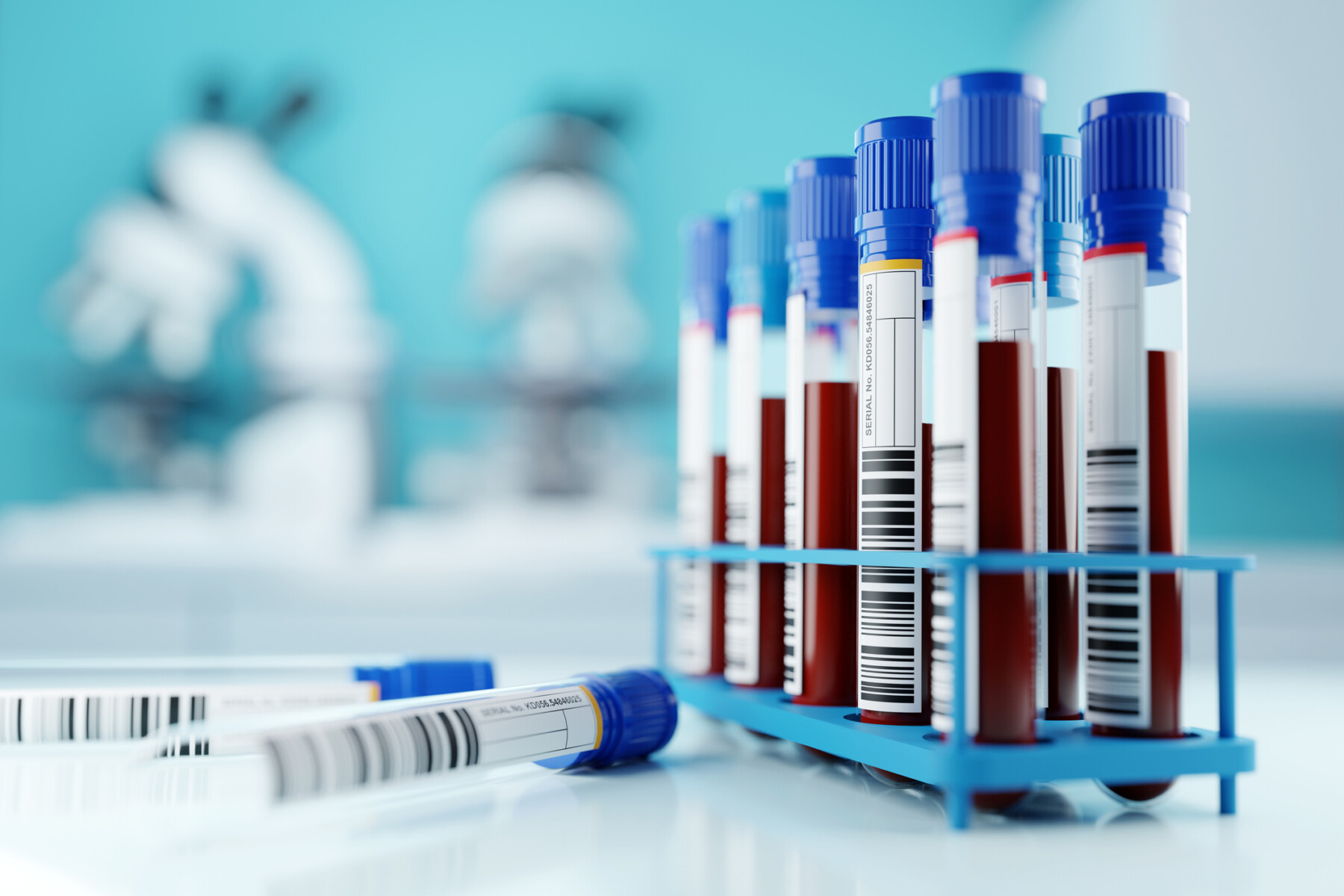
Elevated blood levels of neurofilament light chain, a protein released when nerve cells are damaged, are associated with an increased risk of developing ALS, potentially years before symptoms emerge, according to a new study.
- Elevated blood NfL protein levels are linked to a significantly increased risk of developing ALS years before symptom onset.
- Higher NfL levels were associated with a nearly threefold increased risk of ALS, regardless of specific genetic mutations like C9orf72.
- These findings could help guide the development of blood-based biomarkers to identify people at increased risk and support trials.
Elevated blood levels of neurofilament light chain (NfL), a protein released when nerve cells are damaged, are associated with an increased risk of developing amyotrophic lateral sclerosis (ALS), potentially years before symptoms emerge, according to a new study.
The analysis, which included more than 52,000 people in the U.K., found that higher NfL levels were associated with a nearly threefold increased risk of ALS. Notably, the association was observed both with and without a mutation in the C9orf72 gene, the most common genetic cause of ALS.
“Our … data substantiate the link between [NfL] and ALS, showing that its predictive power as a biomarker … significantly precedes clinical manifestation by as much as a decade,” researchers wrote.
These findings suggest that changes in blood NfL levels may offer clues about the early stages of ALS, although further research is needed to determine whether the protein could be used to identify people at risk of developing the disease.
The study, “Plasma Proteomic Signatures Predict Incident Amyotrophic Lateral Sclerosis: A Prospective Study Stratified by C9orf72 Expansion,” was published in the Journal of Cachexia, Sarcopenia and Muscle.

Nearly 300 participants eventually diagnosed with ALS
ALS is a progressive neurological disorder in which the the nerve cells that control movement gradually deteriorate and die. In most cases, the causes of ALS are unknown, but a minority of cases are known to be caused by mutations in C9orf72 and other genes.
However, it remains challenging to predict whether or not someone will develop the disease in the future. Even among people who are known to carry an ALS-causing mutation, there can be a lot of variation in when and how the disease manifests, for reasons that are unknown.
To investigate whether changes in blood protein levels could help identify people at risk of ALS, a team of scientists in China analyzed data from the U.K. Biobank, a large ongoing study tracking the long-term health of people in the U.K.
Using a technique called plasma proteomics, which allows researchers to measure many proteins in a blood sample simultaneously, the team examined levels of 2,920 proteins in 52,584 participants. None had ALS when their blood samples were collected.
Over an average follow-up of 11.8 years, 291 participants were diagnosed with ALS. Of these, 34 carried a disease-associated mutation in C9orf72.
Higher blood levels of NfL associated with nearly 3 times the ALS risk
The researchers used statistical models to investigate associations between the initial protein levels and ALS risk. After accounting for factors such as age, sex, ethnicity, socioeconomic status, body composition, and alcohol intake, nine proteins emerged as significantly associated with ALS risk.
NfL showed the strongest association. Higher blood levels of this protein were associated with nearly three times the risk of developing ALS. The association remained when people with C9orf72-related ALS and patients without this genetic alteration were examined separately.
Six other proteins — CSRP3, MYBPC1, MEGF10, MYOM3, THBS4, and COL5A1 — were also associated with an increased risk of ALS in at least one of the analyses. In contrast, higher levels of EGFLAM, ITGAV, and CD248 were associated with a lower risk.
The researchers also examined how NfL levels changed in relation to the timing of an ALS diagnosis. Their analysis suggested that levels began increasing approximately 9.3 years before diagnosis, with the most pronounced increase occurring during the one to two years immediately before diagnosis among people without a C9orf72 expansion.
Based on the proteins associated with ALS risk, the researchers developed statistical models incorporating protein levels, participants’ age, and sex to estimate the likelihood of developing ALS within three, five, or 10 years.
Future collaborative efforts utilizing multi-centre biobanks are essential to replicate these results and transition these candidates into clinically useful biomarkers.
To evaluate the models’ accuracy, they calculated a metric called the area under the receiver operating characteristic curve, or AUC. This test evaluates how well a model can distinguish between people who develop a condition and those who do not, with values closer to 1 indicating better discrimination.
The models showed good discriminatory performance, with AUC values above 0.78 across the three time points.
The researchers said the findings could help guide the development of blood-based biomarkers for identifying people at increased risk of ALS and potentially support the design of future studies and early-intervention trials.
However, the study has relied on data from a single population-based study, and only 291 participants developed ALS during follow-up, so similar efforts in other parts of the world will be necessary to verify these results.
“Future collaborative efforts utilizing multi-centre biobanks are essential to replicate these results and transition these candidates into clinically useful biomarkers,” they concluded.




Leave a comment
Fill in the required fields to post. Your email address will not be published.