
Q Therapeutics and REPROCELL Partnering on Stem Cell-based Therapies for ALS
Written by |
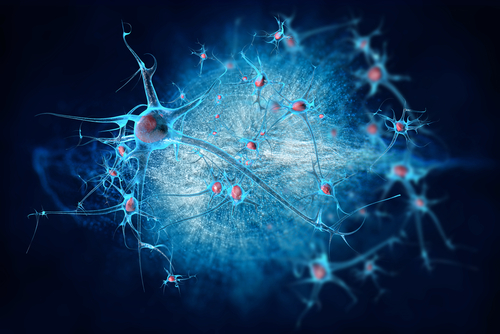
Q Therapeutics of the United States and REPROCELL of Japan are teaming up to develop stem cell-based therapies for central nervous system diseases such as ALS and transverse myelitis, or TM.
The collaboration will meld Q Therapeutics’ expertise in nerve cell therapy with REPROCELL’s expertise in stem cell treatments.
“This collaboration with Q Therapeutics and their scientific co-founder, Dr. Mahendra Rao, enables us to accelerate our therapeutic regenerative medicine business using iPS [induced pluripotent stem] cells,” Dr. Chikafumi Yokoyama, the CEO of REPROCELL, said in a press release. “I am also honored to step into contributing to unmet medical needs like ALS and TM using our proprietary iPS cell technology.”
Q Therapeutics has invented a way to produce purified human glial progenitor cells from any type of tissue. These immature cells give rise to the two types of glial cells that surround nerve cells.
Glials’ role is to help support nerve cells and insulate them from each other. They are also involved in nerve cell repair.
In June 2015, the U.S. Food and Drug Administration approved Q Therapeutics’ Investigational New Drug application for an ALS and TM treatment call Q-CELLS. That designation paves the way for clinical trials of a therapy.
REPROCELL has developed an RNA-based technology for reprogramming stem cells so they can develop into other cells quickly and on a large scale.
The partners hope that combining their proprietary technologies will lead to new approaches to treating several neurodegenerative diseases, according to Rao, Q Therapeutics’ chief strategy officer. He is former director of the National Institutes for Health’s Intramural Center for Regenerative Medicine.
Therapeutics’ experience in U.S. clinical trials and REPROCELL’s in trials in Japan should help facilitate the partners’ efforts to obtain global approvals, they said.
“I am pleased to announce this collaboration with REPROCELL to explore development of therapeutic products from multiple tissue sources,” said Steven Borst, Q Therapeutics’ CEO. “This has the potential to advance our position as a global player in cellular therapeutics and advance our patented products and manufacturing processes toward multiple clinical trials.”



Charlie
"In June 2015, the U.S. Food and Drug Administration approved Q Therapeutics’ Investigational New Drug application for an ALS and TM treatment call Q-CELLS. That designation paves the way for clinical trials of a therapy."
And here we are 2.5 years later and what has happened with this? No trials happening as yet.
Ans: Only this summer has the FDA allowed a Phase 1/2 trial to begin (ie the planning can start). There was no 'paving' of a way for clinical trials if it takes two years. It will take another 6 months minimum for this to begin. Phase 2/3 would mean another three years.
2021 might bring good news if this works, but it is aimed at spinal cord injury, stroke and MS.
Everything moves at the maximum of snail-pace.
Time is running out.At least our children and children might see treatments in the future decades.
We should say our prayers to Science Almighty. The other Almighty isn't involved.
Charlie
Given the recent disappointing news from the Italian study that stem-cells simply do not work when put into the spinal cord area, it is , on reflection, strange that this development's funding cannot be directed at gene-therapy procedures.
Of all the marginally-encouraging areas of research, gene-therapy appears the best of a frustratingly indifferent bunch.
Charlie
https://clinicaltrials.gov/ct2/show/NCT02478450
I was a bit too optimistic about timelines. This trial will not report until 2021. Phase 3 maybe start later in 2022, if all goes well?
Rxs in 2025 ?
This thing is clearly running on lighter fluid, not High Octane.
Steven
I agree I hate hearing about all this stuff and it will not work or otherwise if it will it would be really to late for me I would be done probably died by 2025
Thomas Harrison
It is really a shame that so many people read about things on the horizon but will never get to see the outcomes. People with ALS are in need of things to happen in a different time span than is currently the case. This is not intended to be rude or mean but just to again point out the need of rapid movement for those with ALS.Lets all pray for accurate and speedy research in order to save lives.
Charlie
"Lets all pray for accurate and speedy research in order to save lives."
I agree, Thomas. I pray to Science Almighty.
Praying to the other 'Almighty' is a waste of time, and we haven't got time. He/She/It isn't interested.
Adrianne Taubman
Hurry up please!!! We cannot wait as long as it takes to bring new treatments out!!!
Olga
We are running out of time! This disease is killing me softly but fast!??help please
Charlie
Here’s an example of how quoted company prices can increase dramatically on thin evidence.
Whilst we can all wish this company ‘science-speed’ with its research, we can understand why a company shouts loudly on paper-thin results. We have apparently wonderful results based on only THREE patients’ response. Share price up 77%. It is clear who benefits from the razzmatazz – shareholders, and this ‘breakthrough’ relates only to there being no adverse effects. What about efficacy?
“Cellect Biotechnology Ltd. shares APOP, +76.97% rocketed 79% in premarket trade Thursday, after the Israeli company said it has made a breakthrough in a stem cell trial. The company said it has successfully completed transplantation of stem cells in the first group of three patients using its ApoGraft technology in a mid-stage trial. After a month, all three patients had demonstrated full acceptance of the transplant with no adverse events or reactions. The company is planning to recruit another three patients once the data has been reviewed. “The company believes that these interim results of ApoGraft present the first signs of a breakthrough in stem cell transplantation,” it said in a statement. “The product is transplantable within less than 12 hours from donation through a simple process performed on the bedside after selective physiological elimination of immune reaction-causing cells.” Shares have gained 117% in the last 12 months, while the S&P 500 SPX, +0.25% has gained 19%.”