Stem cell therapy for ALS still available to patients in Asian nation
Regulators maintain approval despite treatment failing to meet trial goal
Written by |
- Neuronata-R, a stem cell therapy for ALS, remains conditionally approved in South Korea despite not meeting a main trial goal.
- The therapy was shown to improve function and survival in slow-progressing ALS patients, despite the overall trial results.
- Manufacturing will resume, and its developer plans to seek U.S. approval with a filing next year.
A stem cell therapy conditionally approved in South Korea for treating amyotrophic lateral sclerosis (ALS) will remain available in the Asian nation despite failing to meet the main goal of a late-stage clinical trial that sought to confirm its effectiveness.
Developer Corestemchemon announced that Neuronata-R (lenzumestrocel) will keep its approval status, though data from that Phase 3 trial will be included in the therapy’s updated label. The results of the ALSummit study (NCT04745299), which tested Neuronata-R against a placebo in more than 100 patients, showed that the stem cell therapy did significantly improve function and survival in a subgroup of people with slow-progressing ALS.
After reviewing the latest trial data, which also showed that Neuronata-R reduced markers of nerve cell damage among study participants, South Korea’s Ministry of Food and Drug Safety [MFDS] decided to maintain the treatment’s approval, Corestemchemon said in a company press release.
Neuronata-R won conditional approval in South Korea in 2014 and became available in the country the following year. Conditional approval allows experimental therapies to be marketed based on preliminary signs of effectiveness in clinical trials. Still, full approval depends on additional clinical trial data confirming such efficacy, as well as a favorable safety profile. ALSummit was meant to serve as a confirmatory trial for Neuronata-R’s full approval.
To date, more than 400 people with ALS have received the infusion treatment.
The company is now working to resume manufacturing so patients can continue receiving the stem cell therapy. Full-scale production is expected by early next year, according to the developer. After that, international patients may also travel to South Korea to receive Neuronata-R.
Further, Corestemchemon said it’s also continuing to advance its plans to seek approval of the therapy in the U.S. The developer intends to request a meeting with the U.S. Food and Drug Administration to discuss Neuronata-R’s development program and its goal of submitting an application next year requesting that approval.

ALS is caused by the gradual dysfunction and loss of motor neurons, the nerve cells that control muscle movement, leading to muscle weakness. Over time, this can limit patients’ abilities to perform daily activities such as moving, eating, and speaking.
Neuronata-R was awarded orphan drug status in US, Europe
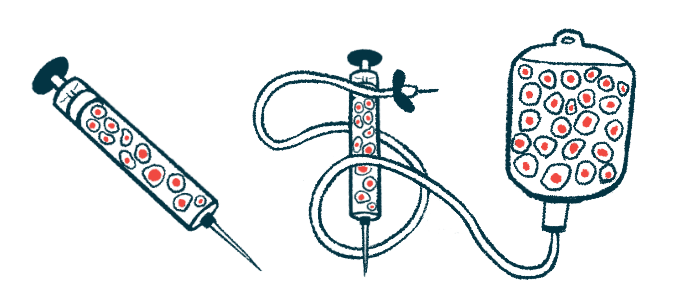
Neuronata-R is a cell-based therapy that uses a patient’s own mesenchymal stem cells (MSCs), a type of adult stem cell obtained from the bone marrow, that can generate several types of cells. Bone marrow is the spongy tissue that’s found inside bones.
After being grown in the lab, MSCs are returned to the patient via direct injection into the spinal canal. Researchers believe the cells release anti-inflammatory molecules — including TGF-beta1, IL-4, and IL-10 — as well as proteins that help protect motor neurons.
Together, these effects are expected to reduce inflammation in the nervous system, support neuron survival, and potentially slow disease progression.
Neuronata-R holds orphan drug designation for ALS in both the U.S. and Europe. This designation aims to incentivize the development of treatments for rare and serious diseases by providing certain benefits to developers, which include tax credits, fee waivers, and a period of market exclusivity if the treatment is ultimately approved.
A Phase 1/2 trial (NCT01363401) tested Neuronata-R in 72 ALS patients who were randomly assigned to receive either two injections of the therapy, given about one month apart, or no treatment.
The results showed the therapy was generally safe and slowed patients’ functional decline for at least six months, based on scores on the ALS Functional Rating Scale Revised (ALSFRS-R), which measures disability progression.
Those findings supported Neuronata-R’s conditional approval in the country.

Stem cell therapy showed benefits for slow-progressing ALS
The ALSummit study was designed to confirm the safety and effectiveness of repeated Neuronata-R injections versus a placebo in a larger number of patients. Eligible participants were adults diagnosed with ALS in the previous two years and whose disease was progressing at a rate of about one ALSFRS-R point per month, indicating a moderately rapid ALS progression.
Top-line, one-year data showed that the trial did not meet its primary goal of showing that Neuronata-R improved Combined Assessment of Function and Survival (CAFS) scores — a measure that combines ALSFRS-R scores and survival — compared with the placebo.
However, analysis of participants with slowly progressing ALS showed the therapy was superior to the placebo in significantly improving CAFS and ALSFRS-R scores after 12 months, or one year.
Patients in this subgroup also showed sustained improvements in slow vital capacity, a measure of lung function, and lower blood levels of neurofilament light chain, a nerve damage marker.
The developer said it has “framed the MFDS decision as a step toward keeping a cell-based option available for the patients most likely to benefit, and toward extending that option to patients beyond South Korea over time.”




Hugo Felix Umeres Caceres
favor un link o un correo para comunicarse por un paciente en Peru
terapia promisoria y esperada pópr largo tiempo
Delia Elizondo
Thank you all working to approve stem cell therapy in the US. I have a son 38 years who was diagnosed 2023 after several years of being misdiagnosed. We pray that he will be considered for medicine medical trail but have had no success. Michael lives in Austin tx
Any information would be greatly appreciate, thank you again 🙏
Mauricio Montalvan
hola , tengo una ela de progresión lenta y me interesa la terapia Neuronata-R. ¿ como los puedo contactar?